
Physical build · workbench test
Pot Maker v2
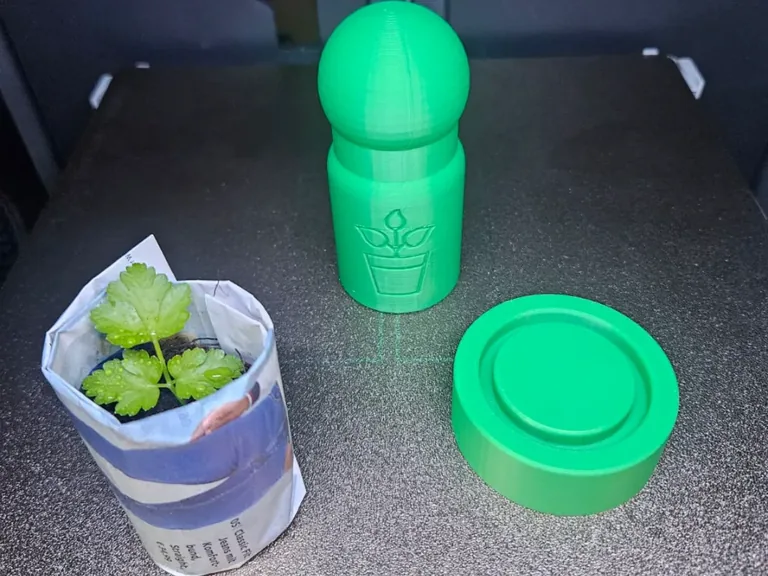
One physical tool exists. It formed newspaper seed pots. The next useful question is not whether we can redraw it—it is whether the tool makes the whole job easier.
What exists
A real tool—and an unresolved job.
The first Tevazirus unit is a printed hand tool that can shape folded newspaper into seed pots.
Using it raised the more important question: is the real frustration folding the paper, keeping it intact, releasing the pot, or resetting for the next one?
This is a workbench update, not a listing. One unit does not establish repeatability, time saved, buyer demand, or a price.
The next useful observation
Watch the whole task, not just the tool.
A polished mold can still be the wrong answer if the operator spends most of the time folding, rescuing torn paper, or cleaning between pots. The next session should begin before the tool is picked up and end only when the work surface is reset.
- Time paper preparation, forming, release, cleanup, and reset separately.
- Keep torn, collapsed, or stuck pots instead of silently correcting them.
- Note where the hands compensate and whether that motion changes across attempts.
- Compare the full workflow with a simple no-tool method.
- Ask a gardener or seed starter which part is actually frustrating before choosing a redesign target.
Before drawing V2
Let the bottleneck choose the change.
Three different observations would lead to three different projects. Keeping them separate is more useful than presenting five speculative features as a roadmap.
- If the paper tears on release
- Study taper, surface finish, and the way the fold is supported.
- If folding takes most of the time
- The mold may not be the bottleneck; test a paper guide or simpler preparation method first.
- If results vary by hand position
- Study grip, registration, and force direction before changing size or adding interchangeable parts.
Next comparison
Keep one tool. Time the whole workflow.
Use the existing unit before manufacturing another. Run the same paper and pot size through a short recorded session, then compare total active time, failed outputs, and cleanup with the simplest no-tool method available.
Does the tool remove enough frustration to deserve a second version—or does it simply move the work somewhere less visible?
A useful result may be a smaller redesign, a paper guide, or no new hardware at all. The observation decides.
What remains open.
The physical unit proves that a newspaper pot can be formed. It does not yet show that the workflow is faster, easier, repeatable, durable, wanted, or worth selling. Those questions stay open until the existing tool is observed in use and compared with the simpler alternative.