
Keeper care guide
Nicaraguan red-tail boa
Boa imperatorAbout this species
What kind of animal is a Nicaraguan red-tail boa?
A Nicaraguan red-tail boa is a large, nonvenomous constrictor snake. It belongs to the species Boa imperator — also called the common boa or Central American boa. "Nicaraguan" describes where the lineage originates: wild populations in Nicaragua. The animals available in the US pet trade are almost entirely captive-bred, so the locality name now describes a keeper lineage more than a wild-caught animal. [Wikipedia — Boa imperator; iNaturalist taxon 539399]
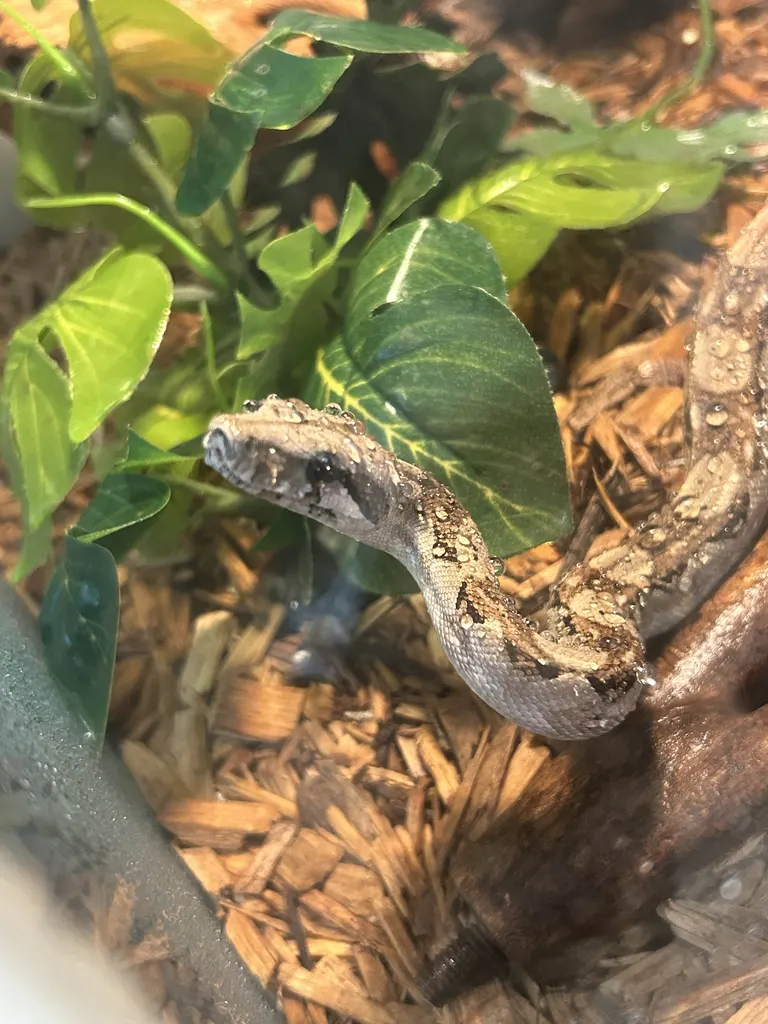
These boas are heavy-bodied and muscular. Adults typically reach 5 to 8 feet in length. Females grow larger than males. The Nicaraguan locality is often noted for a compact saddle pattern along the back and a vivid reddish or orange tail — which is where "red-tail" comes from. Tail color varies between individuals, and captive breeding has produced a wide range of pattern and color variations. [Wikipedia — Boa imperator; iNaturalist taxon 539399]
They kill prey by constriction: coiling around it and tightening until the prey stops breathing, then swallowing it whole. They do not have venom. A bite from a healthy, non-feeding boa is painful and can cause puncture wounds, but it is not medically dangerous in the way a venomous bite is. [VCA: vcahospitals.com/know-your-pet/snakes---constrictor; SpectrumCare]
Boas are solitary. They do not want a companion in their enclosure. They are mostly active at dusk and at night. Young boas climb; older, heavier adults spend most of their time on the ground. [Wikipedia — Boa imperator; SpectrumCare]
Nicaraguan boas are live-bearers — they give birth to live young rather than laying eggs. A single litter commonly includes ten or more young. [VCA — Snakes: Constrictor; iNaturalist taxon 539399]
Wild range, conservation status, and Georgia legality
Wild range: Boa imperator is found from southern Mexico through Central America and into northwestern South America (Colombia and Ecuador), as well as several Caribbean islands. Nicaraguan locality animals come from Nicaragua, where the species inhabits tropical forests, forest edges, agricultural land, and scrub. [Wikipedia — Boa imperator; iNaturalist taxon 539399; IUCN GISD]
IUCN status: Least Concern. Assessed by Montgomery & da Cunha, 20 August 2018. IUCN Red List of Threatened Species 2018: e.T203879A2771951 (doi:10.2305/IUCN.UK.2018-2.RLTS.T203879A2771951.en). Population trend: Stable. The species has a large range and remains locally numerous. [Directly verified at iucnredlist.org/species/203879/2771951, 2026-11-08]
CITES listing: Appendix II. International trade in Boa imperator is regulated under CITES controls but not prohibited. [CABI Compendium — Krysko 2017; Wikipedia — Boa imperator]
Georgia, USA — possession rules
As of 2026-11-08, Boa imperator (common boa) does not appear in any of Georgia's restricted, prohibited, or license-required wild-animal lists under O.C.G.A. § 27-5-5, Ga. Rules 391-4-8-.03, 391-4-8-.04, or 391-4-8-.05 (the Dec 4, 2022 rules), or on the federal Lacey Act injurious-reptile list at 50 CFR § 16.15.
50 CFR Part 16 (Lacey Act injurious-wildlife listings, ecfr.gov, confirmed 2026-11-08): The reptile injurious-wildlife list is at 50 CFR § 16.15. As of this date it lists the brown tree snake (Boiga irregularis), several large pythons (Python molurus including the Burmese python, Python reticulatus, Python sebae, Python natalensis), and four anacondas (Eunectes species). Boidae and Boa imperator do not appear on the §16.15 injurious-reptile list.
This research does not constitute legal advice. Local county and city ordinances are not covered by state rules and are not reviewed here. Laws can change. Anyone keeping or planning to keep a boa in Georgia should verify the current status directly with the Georgia DNR Special Permit Unit (770-918-6408) and their local authorities before acquiring an animal.
IUCN status verified: 2026-11-08. Georgia legal sources verified: 2026-11-08. Review due: 2027-11-08.
Why is this on the keeper side?
The Nicaraguan red-tail boa is IUCN Least Concern with no significant conservation pressure in the current assessment period. It lives on the keeper side because it is a real animal that raises real keeper questions — enclosure scale, humidity, feeding, and handling at adult size are all genuinely different from most other keeper snakes.
Salmonella, supervision, and handling a large constrictor
Reptiles, including boas, can carry Salmonella bacteria even when they look and act completely healthy. [CDC — cdc.gov/healthy-pets/about/reptiles-and-amphibians.html, Jan 13, 2026] Wash hands thoroughly with soap and water after handling a boa, after cleaning the enclosure, after handling the water bowl, and after touching anything from inside the enclosure. Do not let the snake near food-preparation surfaces. Supervise children and help them wash hands immediately after handling.
- Children under 5 should not handle reptiles, including boas — they face higher risk of serious illness from Salmonella exposure. [CDC — Jan 13, 2026]
- Children must have an adult present at all times when handling any reptile.
- At adult size: best practice when handling a boa over 4 feet is to have a second person present. A large boa wrapping around an arm during handling is not necessarily aggressive — snakes hold on for balance — but it needs to be unwrapped calmly and properly. [SpectrumCare; petdoc.ws BoaCare]
Keeper care guide
Nicaraguan red-tail boa care guide
Researched: 2026-11-08 | Review due: 2027-11-08 | Vet review: The husbandry content in this guide has been reviewed.
This care guide is for educational and informational purposes only. It is not veterinary advice. Nicaraguan red-tail boas and all reptiles have individual health needs that may differ from general guidance. Husbandry science evolves; check the review date above. This guide is not legal advice — verify local rules with GA DNR before acquiring an animal.
This guide is based on research from veterinary and scientific sources cited throughout (last checked: 2026-11-08). The husbandry content has been reviewed. Tevazirus recommends an annual wellness exam with an exotic-animal veterinarian for every reptile in your care. Tevazirus does not endorse or take responsibility for the products, animals, or services of any third party mentioned or linked from this guide. If your animal shows signs of illness or distress, contact a veterinarian promptly.
This guide is not legal advice. Local, county, state, and federal laws governing ownership of large constrictors vary and can change. Anyone considering keeping a Boa imperator should confirm the current rules with their state wildlife agency, local authorities, and — in Georgia — the Georgia DNR Special Permit Unit at 770-918-6408 before acquiring an animal.
0 Is this the right pet for you?
A Nicaraguan red-tail boa will grow to 5 to 8 feet long and can live 20 to 30 years in captivity — sometimes longer. [VCA; SpectrumCare; Wikipedia — Boa imperator] That is potentially a 30-year relationship with an animal that needs an enclosure the size of a large wardrobe, a monthly supply of frozen rats, and access to a vet who knows reptiles. At adult size, these animals are strong. A large boa wrapped around an arm during handling requires some care to remove safely.
This may be a good fit if: you are an intermediate or experienced keeper who has already kept a snake; you have the space for a large, secure enclosure; you are planning for 20 to 30 years of care; you have access to an exotic-animal veterinarian; you can handle frozen-thawed prey without squeamishness; you are not renting a property where a large constrictor would violate your lease.
This is probably not a good fit right now if: you are keeping a large snake for the first time; you do not yet have a vet who sees reptiles; you are expecting a snake that wants to interact with you the way a dog does; you have young children in the house and no second adult for supervised handling at adult boa size; you are not certain your housing situation is stable for the next decade.
A note for parents: A young Nicaraguan red-tail boa can make a genuinely interesting animal for an older child or teen with parental supervision and education about safe handling. But the animal will not stay small. A plan for adult size — including who provides primary care and who funds the eventual full-size enclosure — is the conversation to have before the snake comes home.
1 Setting up the enclosure
Enclosure size — plan for the adult, not the hatchling. The most common husbandry failure in boa keeping is building for the juvenile and scrambling to catch up as the animal grows. [Herpeton Academy; petdoc.ws BoaCare]
A typical adult Nicaraguan red-tail boa (B. imperator) needs at minimum:
- Males: approximately 5 to 6 feet (150–180 cm) long by 2.5 to 3 feet wide by 2.5 to 3 feet tall — or larger. [Herpeton Academy; petdoc.ws BoaCare]
- Females: approximately 6 to 8 feet (180–240 cm) long by 3 feet wide by 3 feet tall — or larger. Large females may need 8 × 4 × 4 ft. [petdoc.ws BoaCare; Herpeton Academy]
The plain rule-of-thumb: the snake should be able to stretch out fully inside the enclosure. [PetMD DVM]
Enclosure type: PVC enclosures with front-opening doors hold heat and humidity far better than screen-top glass aquariums, are lighter, and reduce the stress of top-down approach. [krawlo.com; Herpeton Academy] The enclosure must be secure — boas are strong enough to push out poorly latched doors. Check all latches and locks routinely. [Herpeton Academy; SpectrumCare]
Temperature gradient
| Zone | Temperature | Source |
|---|---|---|
| Warm hide / basking surface | 88–90°F (31–32°C) | petdoc.ws BoaCare; Mortal Coil |
| Warm side ambient | 82–86°F (28–30°C) | petdoc.ws BoaCare; Herpeton Academy |
| Cool side ambient | 75–80°F (24–27°C) | SpectrumCare; PetMD; Herpeton |
| Nighttime minimum | No lower than 70–72°F | PetMD; general keeper consensus |
All heat sources must be on a thermostat. Unregulated heat sources cause thermal burns. Never use hot rocks. Never place bulbs inside the enclosure where the snake can contact them. [PetMD; SpectrumCare]
Humidity
Target: 60–70% ambient, increasing to 75–80%+ during shed cycles. [krawlo.com; Herpeton Academy; Mortal Coil Serpentry] The Nicaraguan locality is a humid tropical and forest-edge habitat; this species needs moderate to high humidity. Monitor with a reliable hygrometer at animal level in the middle of the enclosure.
Substrate
Good choices: coconut fiber (coir), cypress mulch, coconut fiber and cypress mulch blend, organic topsoil and play sand blend (for bioactive setups). [HabitatCraft; krawlo.com; Herpeton Academy] Avoid: cedar or pine shavings (respiratory irritants; toxic); pure aspen is too dry for this species. [krawlo.com; Herpeton Academy]
Hides, water, and furnishings
- At least two hides: one at the warm end, one at the cool end. Both should be large enough for the snake to fit entirely inside and feel secure.
- A humid hide (lined with damp sphagnum moss or damp substrate) during shed cycles. [petstore.com; krawlo.com]
- Climbing branches or sturdy shelves. Young boas use vertical space. All climbing structures must be anchored. [SpectrumCare; Herpeton Academy]
- Large, heavy water bowl. Big enough for the snake to soak in. Cannot tip over. Change water at least twice a week or whenever visibly soiled. [PetMD; SpectrumCare]
Sources: Herpeton Academy; petdoc.ws BoaCare; Mortal Coil Serpentry; krawlo.com; SpectrumCare; PetMD DVM; HabitatCraft; petstore.com.
2 Feeding and diet
Boa imperators are carnivores. In captivity, feed appropriately sized frozen-thawed rodents. For juveniles, mice or small rats; for adults, rats; for very large females, larger rodents. Prey size should roughly match the snake's widest body diameter — not larger. [SpectrumCare; Herpeton Academy; PetMD]
Frozen-thawed is the standard: Live prey is not recommended. Live rodents can bite and scratch snakes, causing serious wounds. Thaw prey to approximately natural body temperature (~90°F) before offering. Use tongs. Do not hand-feed. [VCA — Snakes: Constrictor; PetMD; Mortal Coil Serpentry]
Feeding frequency:
| Life stage | Frequency |
|---|---|
| Juvenile (under 1 yr) | Every 7–10 days |
| Sub-adult (1–2 years) | Every 10–14 days |
| Adult (2+ years) | Every 2–4 weeks, depending on prey size and body condition |
Obesity is a real risk. Chronic overfeeding leads to obesity, fatty liver, reduced mobility, and shortened lifespan. Monitor body condition — the snake should have a smooth, rounded profile, not pronounced ridges over the spine, but not fat rolls or a square cross-section. [SpectrumCare; petdoc.ws BoaCare]
Do not handle for at least 24 to 48 hours after feeding. Handling can cause regurgitation. [SpectrumCare; Mortal Coil Serpentry]
Fresh water: always available. Change at least every two days or whenever soiled.
No routine supplementation needed: unlike insectivores, boas eating whole prey get calcium, vitamins, and minerals from the whole animal. [SpectrumCare]
Sources: SpectrumCare; Herpeton Academy; PetMD DVM; VCA; Mortal Coil Serpentry; petdoc.ws BoaCare.
3 Shedding
Boa imperators shed their skin periodically as they grow. A snake in shed cycle will develop dull, opaque scales and hazy, blue-tinted eyes. During this period the snake cannot see well, may be more defensive than usual, and should not be handled. [Wikipedia — Boa imperator; SpectrumCare]
Healthy sheds come off in one or two large pieces. Sheds in many small fragments typically indicate low humidity or a health problem.
Supporting a complete shed: maintain humidity in the 60–70% range, increasing to 75–80% during shed cycles. Ensure the humid hide is available and damp. A large water bowl lets the snake soak before shedding, which loosens the skin. [petstore.com; krawlo.com; Herpeton Academy]
Retained shed: Retained eye caps — do NOT attempt to remove them. A vet should handle retained eye caps. [petdoc.ws BoaCare] Retained shed at the tail tip: can cut off circulation. See a vet promptly.
Sources: SpectrumCare; petdoc.ws BoaCare; Herpeton Academy; krawlo.com; petstore.com.
4 Handling and safety
Starting out — quarantine and acclimation: When a new boa comes home, give it at least one to two weeks to settle in before any handling. The animal needs to establish its territory, eat, and decompress from transport stress. Forcing early handling on a stressed snake is counterproductive and risks a defensive bite. [PetMD; SpectrumCare]
Technique: Support the full body. Approach from the side of the body. Let the snake move through your hands rather than restraining it. Keep sessions calm and unhurried. [SpectrumCare; VCA]
At adult size — a plain, honest note: A Nicaraguan red-tail boa at adult size is a physically powerful animal. Best practice when handling a boa over 4 feet is to have a second person present. This is not alarmism; it is what experienced keepers recommend. [SpectrumCare; petdoc.ws BoaCare]
The practical threshold: when the snake is large enough that you could not safely and calmly remove it from around your own arm or torso alone, have a second handler present. That point differs by keeper and by snake.
Do NOT handle during shedding. A snake in shed cannot see well and is more likely to defend itself. [SpectrumCare; Wikipedia — Boa imperator]
Do not handle 24 to 48 hours after feeding. Risk of regurgitation. [SpectrumCare]
Reading stress signals: hissing, musking (releasing foul-smelling musk from scent glands), tightening or pulling away during handling, and striking are all signals to put the snake down and try another day. [SpectrumCare]
Handling note for kids: Children under 5 years old should not handle reptiles, including boas — they face higher risk of serious illness from Salmonella exposure. [CDC — Jan 13, 2026] Older children can handle a boa with direct parental supervision. An adult should be present and in control at all times. As the snake grows, handling should require an adult present.
Sources: SpectrumCare; petdoc.ws BoaCare; PetMD DVM; VCA; CDC.
5 Lifespan
Boa imperators commonly live 20 to 30 years in captivity with good care. Some individuals exceed 40 years. [VCA — Snakes: Constrictor; SpectrumCare; Wikipedia — Boa imperator; PetMD (up to 30 years with proper care)]
Plan for 20 to 30 years. This means multiple enclosure upgrades as the snake grows from juvenile to adult.
Sources: VCA; SpectrumCare; PetMD DVM; Wikipedia — Boa imperator.
6 Health — common conditions and when to call a vet
Most health problems in captive boas trace back to husbandry errors: wrong temperatures, low humidity, obesity from overfeeding, contaminated water, poor ventilation, or chronic stress. Getting the environment right is the most important health investment. [Herpeton Academy; SpectrumCare; petdoc.ws BoaCare]
Inclusion Body Disease (IBD)
The most serious boa-specific disease to know about. IBD is a fatal viral disease caused by a reptarenavirus. It affects boas and pythons. [Merck Vet Manual; Wikipedia — IBD; Purdue CVM]
In boas, the disease can be chronic — animals may carry the virus for months to years with few or no signs before symptoms appear. When signs do develop, they can include: regurgitation, loss of appetite, weight loss, poor shed quality, secondary infections (stomatitis, respiratory infections), and eventually neurological symptoms — head tremors, loss of the ability to right itself when turned over, stargazing (holding the head arched back and looking upward), disorientation, seizure. [Merck Vet Manual; Wikipedia — IBD; Purdue CVM; VIN VetzInsight]
There is no treatment or vaccine for IBD. It is always fatal. [Wikipedia — IBD; Purdue CVM; VIN VetzInsight] Prevention: buy captive-bred animals from reputable sources; quarantine any new snake for three to six months before it contacts other boids; control snake mites (Ophionyssus natricis), which are a suspected vector. [Purdue CVM; VIN VetzInsight]
Respiratory infections
Signs: wheezing, open-mouth breathing, nasal discharge, excess saliva, labored breathing. Usually linked to low temperatures, high humidity with poor ventilation, or stress. Require vet evaluation and typically antibiotics. [SpectrumCare; petdoc.ws BoaCare; PetMD]
Stomatitis (mouth rot)
Signs: swollen, red, or bleeding gums; pus or caseous material in the mouth; rubbing the face; reluctance to eat; inability to close the mouth fully. Requires vet treatment. Do not attempt home treatment. [PetMD; petdoc.ws BoaCare]
Dysecdysis (incomplete shed)
Retained eye caps and retained shed at the tail tip are the most serious shed problems. See a vet promptly for retained eye caps or tail constriction. [petdoc.ws BoaCare]
External parasites (mites)
Snake mites (Ophionyssus natricis) appear as tiny dark specks on the snake, near the eyes, around the head, or in the water bowl. Require vet-prescribed treatment; over-the-counter products can be harmful or ineffective. Mites are also a suspected IBD transmission vector. [SpectrumCare; Purdue CVM; VIN VetzInsight]
When to call a vet — the red-flag list
- Wheezing, open-mouth breathing, bubbles, or nasal/oral discharge
- Repeated regurgitation (not a one-off)
- Progressive weight loss or muscle loss despite eating
- Neurological signs: loss of righting reflex, head tremors, stargazing, corkscrewing, disorientation, loss of coordination — call a vet immediately; these can indicate IBD
- Burns, deep wounds, swelling, or suspected fractures
- Persistent mouth redness, pus, bleeding, or inability to close the mouth
- Severe or recurrent incomplete sheds, retained eye caps, or tail constriction
- Heavy mite infestation
- Prolonged unusual soaking behavior
- Abdominal swelling or distension, straining, or prolapse
- Any sudden or unexplained change in behavior, posture, or movement
[Sources: petdoc.ws BoaCare; PetMD; SpectrumCare]
Annual wellness exam: boas benefit from an annual check-in with an exotic-animal veterinarian. The ARAV (Association of Reptilian and Amphibian Veterinarians) locator at arav.org is the right starting point. In Georgia, the University of Georgia College of Veterinary Medicine has an exotic animal service.
Sources: Herpeton Academy; SpectrumCare; petdoc.ws BoaCare; PetMD DVM; Merck Vet Manual; Purdue CVM; VIN VetzInsight; ARAV.
7 Sourcing — captive-bred matters
Wild-caught Boa imperator individuals are often illegally captured and experience significant stress in transport. Wild-caught animals carry higher parasite loads, are harder to acclimate, and introduce unknown pathogens to a collection. [Wikipedia — Boa imperator captivity section]
Captive-bred boas are widely available in the US. Buy from a reputable captive-bred source that can provide documentation of captive-bred status and clear lineage information.
CITES Appendix II means that any imported animals (not captive-bred in the US) should come with proper CITES documentation. Captive-bred US animals do not require CITES import/export permits for domestic sale, but documentation is still important for quarantine protocols. [Herpeton Academy; CABI Compendium]
Sources: Herpeton Academy; CABI Compendium; Wikipedia — Boa imperator.
Sources and citations
- Tier A — Veterinary / Scientific / Government
- VCA Animal Hospitals (Gregory Rich DVM, Laurie Hess DVM, Rick Axelson DVM): "Snakes: Constrictor." vcahospitals.com/know-your-pet/snakes---constrictor. Accessed 2026-10-29.
- PetMD (Maria Zayas, DVM — authored Aug 2023): "Pet Boa Constrictor Care Sheet." petmd.com/reptile/boa-constrictor-care-sheet. Accessed 2026-10-29.
- SpectrumCare: "Boa Imperator: Health, Temperament, Care & Costs." spectrumcare.pet/reptiles/snakes/breeds/boa-imperator. Accessed 2026-10-29.
- Merck Veterinary Manual (MSD Vet Manual): "Viral Diseases of Reptiles — Inclusion Body Disease of Boid Snakes." msdvetmanual.com. Accessed 2026-10-29.
- Purdue University College of Veterinary Medicine: "What to Know About Inclusion Body Disease in Boas and Pythons." vet.purdue.edu. Accessed 2026-10-29.
- VIN VetzInsight: "Inclusion Body Disease of Snakes." vin.com/vetzinsight. Accessed 2026-10-29.
- CDC: "Reptiles and Amphibians." cdc.gov/healthy-pets/about/reptiles-and-amphibians.html. Last updated Jan 13, 2026. Verified 2026-11-08.
- IUCN Red List: Montgomery, C.E. & da Cunha, O. 2018. Boa imperator. IUCN Red List of Threatened Species 2018: e.T203879A2771951. Directly verified at iucnredlist.org/species/203879/2771951, 2026-11-08.
- O.C.G.A. § 27-5-5 (2025 Code of Georgia). Justia: law.justia.com/codes/georgia/title-27/chapter-5/section-27-5-5/. Verified 2026-11-08.
- Georgia Rules 391-4-8-.03, 391-4-8-.04, 391-4-8-.05 (Rules and Regulations of the State of Georgia, Board of Natural Resources, effective Dec 4, 2022). rules.sos.ga.gov/gac/391-4-8. Verified 2026-11-08.
- Georgia DNR FAQ: "Rules Pertaining to Wild Animals." georgiawildlife.com/wild-animal-rules. Verified 2026-11-08.
- 50 CFR Part 16 (Lacey Act injurious-wildlife listings), Subpart B §§ 16.11–16.15 (including § 16.15 reptiles). ecfr.gov/current/title-50/chapter-I/subchapter-B/part-16. Verified 2026-11-08. Title 50 last amended 11/02/2026 per eCFR header.
- Tier B — Reputable keeper community
- Herpeton Academy: "Boa Imperator Care Guide." academy.herpeton.net/en/caresheets/snakes/boa-imperator/. Accessed 2026-10-29.
- Mortal Coil Serpentry: "Common Boa (Boa imperator) Care Guide." mortalcoilserpentry.com. Accessed 2026-10-29.
- krawlo.com: "Boa Constrictor Care Guide." krawlo.com/blog/boa-constrictor-care. Accessed 2026-10-29.
- HabitatCraft: "Boa Constrictor Care Guide (2026)." habitatcraft.com. Accessed 2026-10-29.
- petdoc.ws (Dr. Bob's Pet Health Information): "Boa and Related Snake Care Guide." petdoc.ws/BoaCare.htm. Accessed 2026-10-29.
- petstore.com blog: "Boa Constrictor Care." Accessed 2026-10-29.
- Wikipedia — "Boa imperator": en.wikipedia.org/wiki/Boa_imperator. Accessed 2026-10-29.
- iNaturalist taxon 539399 — Boa imperator (Central American Boa). inaturalist.org/taxa/539399. Accessed 2026-10-29.
- CABI Compendium — Krysko (2017): "Boa imperator (Central American Boa)." cabidigitallibrary.org. CITES Appendix II. Accessed 2026-10-29.